Vue d'ensemble
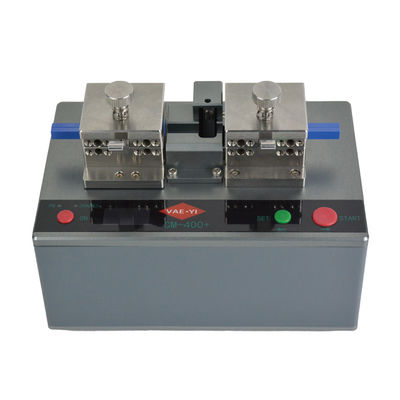
Une machine de polissage de connecteurs à fibre optique est un dispositif optique de précision spécialisé conçu pour le meulage fin et la finition de surface des férules de connecteurs de fibre. C'est un équipement essentiel dans la production de masse de cordons de raccordement à fibre, de queues de cochon et de composants de communication optique. En polissant précisément la face d'extrémité du connecteur, la machine élimine les rayures de surface, les résidus de résine et la courbure inégale, optimisant ainsi les paramètres clés de performance optique, notamment la perte d'insertion (IL) et la perte de retour (RL), et assurant une transmission de signal optique stable et à faible perte. Largement appliquée dans la construction FTTH, le câblage de centres de données, la fabrication de dispositifs optiques et les projets d'ingénierie des communications, elle remplace le polissage manuel traditionnel pour fournir des résultats de polissage standardisés, répétables et à haut rendement.
Principe de fonctionnement
La machine adopte la technologie de polissage orbital à pression constante mécanique. Elle fixe plusieurs connecteurs de fibre sur un gabarit de polissage dédié et exécute des trajectoires de polissage prédéfinies avec une pression, une vitesse et un temps contrôlables. Grâce à un meulage progressif avec des films de polissage de différents grains, elle élimine l'adhésif résiduel, les bavures de fibre et les défauts de surface sur la face d'extrémité de la férule. L'ensemble du processus permet d'obtenir une courbure d'extrémité constante, une planéité parfaite du cœur de fibre et une finition de surface ultra-lisse, répondant aux normes industrielles de polissage UPC et APC.
Caractéristiques principales du produit
1. Structure de polissage stable
Équipée de structures de pression professionnelles à quatre coins ou centrales. La conception de pression à quatre coins assure une distribution de pression uniforme et stable sans sauts ni déviations pendant le fonctionnement, améliorant efficacement la cohérence des paramètres 3D de la face d'extrémité (rayon de courbure, décalage de l'apex, hauteur de fibre) et prenant en charge la production par lots à long terme.
2. Large compatibilité
Prend en charge les connecteurs monofilaires courants tels que SC, LC, FC, ST, ainsi que les connecteurs MPO/MTP multi-cœurs. Les gabarits et les programmes de processus personnalisables s'adaptent aux différentes spécifications de connecteurs, couvrant les scénarios de connexion optique de communication civile conventionnels et de centres de données haute densité.
3. Paramètres intelligents réglables
Intègre un système de contrôle numérique avec affichage en temps réel de la pression de polissage, de la vitesse de fonctionnement, du temps de traitement et de l'état de fonctionnement. Tous les paramètres de processus sont librement réglables et peuvent être enregistrés sous forme de préréglages personnalisés. Les opérateurs peuvent rapidement basculer entre les modes de polissage UPC/APC pour correspondre aux différentes normes de production.
4. Haute efficacité et haut rendement
Comparé au polissage manuel, le mode de polissage par lots automatisé améliore considérablement l'efficacité de la production. Une seule opération peut traiter 12 à 48 connecteurs simultanément avec un taux de qualification stable des produits finis, réduisant efficacement les coûts de main-d'œuvre et la dépendance technique vis-à-vis des travailleurs.
5. Durable et faible entretien
Adopte un cadre métallique à haute rigidité et des composants de transmission de précision, offrant un fonctionnement stable, un faible bruit et une longue durée de vie. La conception modulaire simplifie le nettoyage quotidien, le remplacement des consommables et la maintenance de l'équipement, réduisant ainsi les temps d'arrêt de production.
Norme de qualité de polissage
Après un polissage professionnel, la face d'extrémité du connecteur ne présente aucune rayure, aucune piqûre et aucun résidu de poussière. Elle est entièrement conforme aux normes industrielles internationales : face d'extrémité UPC avec une perte d'insertion ultra-faible et une perte de retour élevée ; face d'extrémité biseautée APC supprimant efficacement la lumière réfléchie, s'adaptant parfaitement aux scénarios de transmission de signal optique de haute précision et évitant les interférences de signal et l'atténuation causées par un mauvais traitement de la face d'extrémité.
Applications principales
Il est largement utilisé dans la production de masse de cordons de raccordement à fibre optique et de queues de cochon, le traitement et la personnalisation de composants passifs optiques, la production de support pour l'ingénierie FTTH, le traitement de composants de câblage optique de centres de données, et la finition de qualité des connecteurs optiques de communication dans les projets de stations de base de communication.
Avantages par rapport au polissage manuel
Le polissage manuel repose sur l'expérience personnelle et ne peut garantir une pression constante et une trajectoire uniforme, ce qui entraîne une qualité de face d'extrémité incohérente et un taux de défauts élevé. La machine de polissage automatisée réalise une opération standardisée et procédurale, avec des effets de polissage hautement répétables, une qualité de lot stable, une efficacité de production plus élevée et une meilleure adaptabilité pour la production industrielle à grande échelle.

 Votre message doit contenir entre 20 et 3 000 caractères!